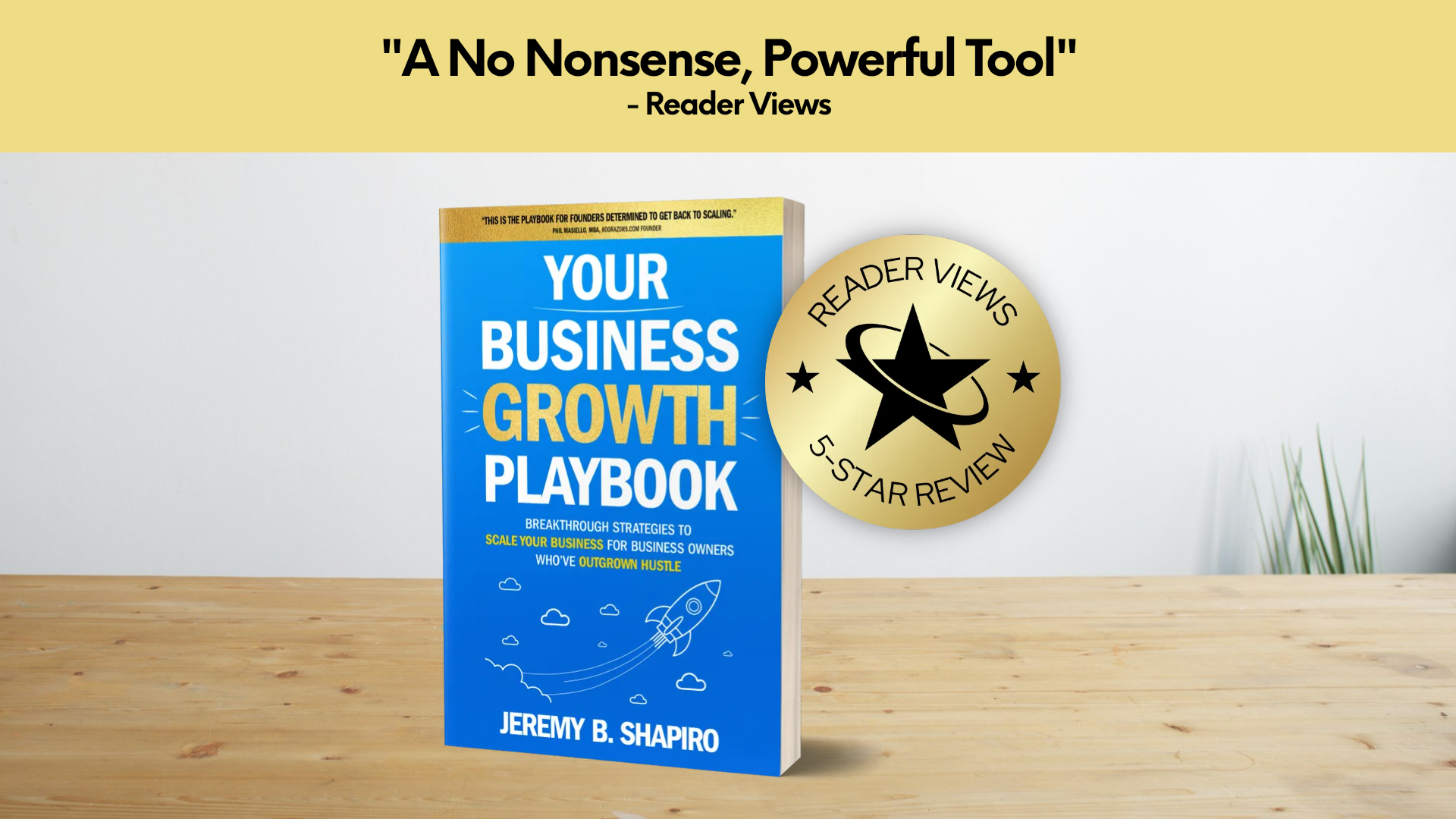
Your Business Growth Playbook by Jeremy B. Shapiro introduces entrepreneurs to different plateaus that can happen to any size business. It can be anything from growth stalling to new customers being harder to find. Shapiro explains that instead of avoiding plateaus, businesses should anticipate them and plan for them before they hit. He asks the question, “What are the tactical and strategic methods that they choose to find new growth and get ‘unstuck’?” This guide not only answers this question but also offers real-world examples that businesses can implement right now, and spells out the formula for the Three Big Levers to Scale Revenue.
By the second chapter, Shapiro covers the biggest obstacle to growth and profit, which is a huge focus on revenue to grow your company. He says that profitability is what makes the difference, and he used the example of WeWork and how they focused so much on revenue and growing the company, but they were losing so much money per member that it eventually led them to bankruptcy. He makes a really good point that a business “can’t make up for a lack of profit with volume!” He also explains why discounts don’t always produce profitability. On pages 16-19 of Chapter 2, Shapiro provides some very helpful questions that businesses can use now to assess their baseline.

This is probably one of the most in-depth business guides or profitability guides I think business owners, big or small, will find helpful. It is packed with so much helpful information within each chapter. Readers will learn about Customer Lifetime Value or CLV, and he uses the example of King Gillette of the Gillette Company’s model: the razor plus razor blade that involves selling the product for cheap, to get customers hooked on buying related products later on. This strategy is why Gillette was able to produce a huge loyal customer base that keeps coming back. I also like that Shapiro puts all of this in perspective with the use of the CLV formula.
This guide is very interesting and informative because it contains valuable information that even an upstart business can start using now to grow profitably. Shapiro discusses how to expand your product portfolio, which I think many business owners will find very valuable. In using the example of the revenue an amusement park makes, He breaks down the admissions tickets, the food and beverage sales, and the retail merchandise. These are subgroups within the main group, which makes your portfolio much broader. According to Shapiro, this 20% within the subgroup will get you 80% of the result.
If any businesses ever feel lost or ready to call it quits, it would be well worth it to read this guide to restore faith and try something simple that will work for any size business at any stage. This guide is packed with everything from bounce-back offers to consumables. The possibilities are vast, and business owners and even those who are thinking about starting a business can learn quite a bit. There’s space to write down your fast-action plan in Chapter 14. Shapiro also guides you through answering questions about your main products and services, your pricing, your bundles or packages, why you chose certain price points, and your ideal customer. Another standout in this guide is what Shapiro refers to as the Eisenhower Matrix; it allows businesses to figure out which of their gigantic to-do lists should get done and when.
Readers who have read similar guides, such as Ben M. Bensaou’s Built to Innovate, would appreciate Jeremy B. Shapiro’s Your Business Growth Playbook, especially if they are looking for real solutions that could work for their business at any level.