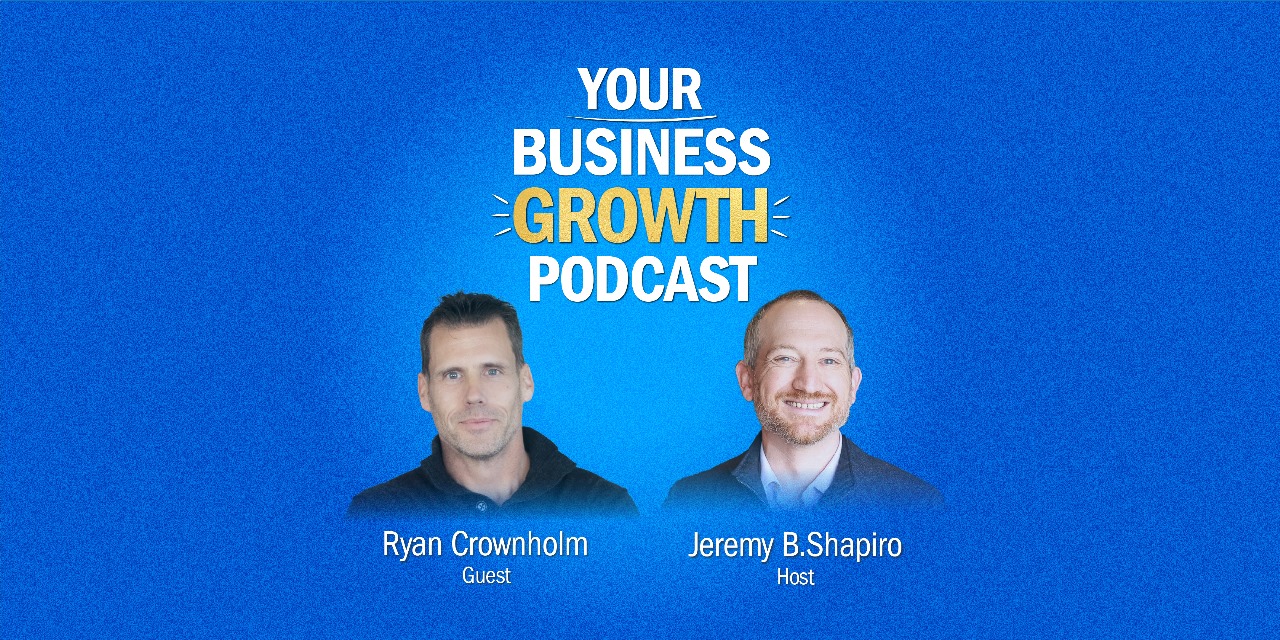
Imagine building a successful business only to see its revenue slump hard, seemingly overnight, due to a massive market shift like the housing crash. That was the reality for Ryan, a US Army veteran, serial founder, and entrepreneur with deep roots in construction. He was facing a crisis, where the ‘hustle’ he was used to simply wasn’t working anymore.
But instead of going under, Ryan did something radical. He pivoted and applied a key strategy that I love. This decision wasn’t just about survival; it was about transformation. This strategic change streamlined his processes, reduced costs, increased revenues, and increased profits. It led to him doubling the size of his business year over year over year until he became the largest swimming pool removal contractor in America!
On this episode of Your Business Growth Podcast, Ryan shares how he leveraged two key strategies from Your Business Growth Playbook to turn a market catastrophe into a systemized, scalable, and highly profitable business. His story is a powerful testament to how strategic focus and decisive ‘action drives change’ can help any business owner break through plateaus and get back to growth.
Tune in as Ryan unpacks his journey, from feeling caught in ‘the hustle trap’ to building a highly efficient, metrics-driven business that thrives by doing less, and making more.
About Ryan Crownholm

Ryan Crownholm is a U.S. Army veteran, entrepreneur, and investor in the construction technology space, known for building scalable businesses that prioritize efficiency, clarity, and innovation.
As the founder of MySitePlan.com and DirtMatch.com, Ryan has transformed traditional industries through smart systems and customer-centric platforms. His work reflects a deep understanding of operations, automation, and the realities of blue-collar business ownership.
A veteran of both military service and service-based ventures, Ryan is also the author of The Hustle Trap, a book that challenges the myth of constant grind and champions business systems that serve your life—not the other way around. With a degree in Business and Economics from Saint Mary’s College of California, he leads with grounded strategy and direct communication.
Ryan is a respected voice in AI-powered business tools, construction tech, and solopreneurship. Through his companies, newsletters, and workshops, he helps others streamline operations, reclaim their time, and build ventures that align with personal freedom and long-term vision.
Connect with Ryan Crownholm
Like This Episode? There’s More!
Subscribe!
Your Business Growth Podcast is available on all major podcast platforms. Subscribe today!
Get the Book!
Pickup the #1 Best Seller, Your Business Growth Playbook today online or at your local bookseller!
Meet Jeremy!
Book your Blueprint Discovery Call with Jeremy today and get back to the growth you deserve!
Ryan Crownholm Episode Transcript
I got run over my truck and, uh, so I, you know, I had, I was hospital, I was in a wheelchair. I, I just couldn’t go out and operate. And then on top of it, the housing market starting to fall apart. And we were very, very tied into the housing market because the housing market was crashing. People are a little tied on money, can’t even have to do something about it.
So do you wanna pay 80 or a hundred thousand dollars to completely remodel it? Or would you like to pay 10 or $20,000 and get rid of, get locked up in a hospital to see what happens to your business, because it might actually be a really good thing. But if you get four people doing 80% of what you can do, suddenly now your growth becomes exponential and you start to settle for a little bit less than perfection.
Magic can happen.
Imagine building a successful business only to see its revenue slump hard, seemingly overnight due to a massive market shift like a housing crash. That was the reality for Ryan. A US Army veteran serial, a founder and entrepreneur with deep roots in construction. He was facing a crisis where the hustle he used simply wasn’t working anymore, but instead of going under, Ryan did something radical.
He pivoted and applied a key strategy that I love. This decision wasn’t just about survival, it was about transformation. This strategic change streamlined his processes, reduced costs, increased revenues, and increased profits. It led to him doubling the size of his business year over year over year until he became the largest swimming pool removal contractor in America.
Today Ryan’s gonna share how he leveraged two key strategies from your business Growth Playbook to turn a market catastrophe. Into a systemized, scalable, and highly profitable business. His story is a powerful testament to how strategic focus and decisive action drives change can help any business owner break through plateaus and get back to growth.
Let’s tune in as Ryan unpacks his journey from feeling caught in the hustle trap to building a highly efficient metrics driven business that thrives by doing less and making more. Ryan, welcome to the show. Hey. Hey. What’s up Jeremy? Good to see you. So glad you’re able to join us. So Ryan, let’s go back in time.
Bring us back to before 2007, how did you get into the whole construction space?
I was an ex-military guy. Uh, when I got out, I was, um, bartending and I was going to college and, uh, I don’t let you stay up late at night and bars do that to you, so I had to find something else. One day I went to help him hit, uh, some hauling with a friend and I thought, Hey, that’s a cool business.
There was no way what I ever got, junk or any of these other guys out there yet. But I decided I would start my own hauling company just to go out and pull trash. And so I got a trailer to pull behind my pickup truck and, uh, went out and went to work. And turned out that that grew into a, a pretty decent sized business.
Uh, by the time I graduated from college, I think I had about 10 trucks running and, uh, bunch of guys. And yeah, it was, it was, it was good and kind of grew that over time into a construction company.
So, like, what was the market like at the time? You know, you guys were sort of early in this space, but. Other companies were doing that.
Other guys out there had trucks and all. How did you plan to differentiate at the time?
So back then it was a, it was a handful of guys that were all on pickup trucks, uh, very disorganized. They all went to each job and quoted them individually. So it was, it was a really disparate market. There was no organization whatsoever.
I have a very organized mind, and to me I was like, well, I, I need to have a pricing model. I gotta have, you know. I don’t want to go to every job twice to like bid one time and then come back another time. I need my trucks to look nice. I want guys that wear polo shirts and like, I want people to feel comfortable having at their house.
And so I just went through and put all these things together and uh, it turned out it really resonated with the market and we just, we exploded. We were tripling the size of the business every year.
I love that you looked at the competition, uh, and differentiated in a huge way. Like just hearing how you show up, how you guys did business and how you present it to a client, um, is really cool.
Like, and that obviously made a difference. So like, what were some of the earlier wins that came from that you guys differentiated, you were tripling the size of the business. Like what, uh, what did that mean?
I mean, it was fun because there was no, there was no one else doing it the way we were doing it so that it was, I really like creating business models.
Uh, and I was, you know, our customers were blown away. They loved us, so we had a huge repeat customer base. Uh, you know, I, I realized really quickly that clean trucks, uh, attract a lot more business than dirty trucks. And so really focused on making sure my trucks were all really shiny and, you know. Uh, sort of leveraging my people in the right way.
And I, it was just fun, you know, also, I was, I was young. I was in, I was thinking I was 25 years old, 24, 25 years old. Uh, man, I had so much energy back then that I wish I could have today, but it was just, it was fun. I, I think that one of the mistakes I made, because that was actually a very repeatable. Easy business to run is I got my ego involved and was like, I wanna do bigger stuff.
And so I started doing more of the demolition and buying tractors, roll offs and dump trucks and 10 wheelers. And, and, uh, eventually my business got really kind of, uh, more complicated when what I probably should have done was just double down on the thing that I was really nailing.
Yeah. So, so it sounds like you went too wide instead of narrowing and niching in
y Yeah, so I, I really dominated the East Bay, uh, you know, and like I, to the point where we had all the business, you know, I think the guys at the landfill said my trucks were 10 of my trucks were coming in for every one of my competitor’s trucks.
I mean, we were, we were completely dominating. What I should have done is explore and I, I had started to look into, it was like a, a franchise model or just, you know, expanding out and growing that same business model that I’d really nailed down and I just, you know, I wanted to do bigger things I guess.
So now we get to 2007. You guys have been growing. All is going well. Many of us remember that housing market shift well, but uh, you know, walk us through what that meant for you as, you know, in, in the contractor, uh, space. Like what did that look like when the housing market turned?
There was so much worry to it.
So, uh, 2007, I dunno if you remember this, Jeremy, but that same year, July 3rd, I had a pretty bad accident that put me in the hospital. And uh, it was, you know, I pulled, I got run over by truck and, uh, so I, you know, had. I was hospital, I was in a wheelchair. You know, I just couldn’t go out and operate. And then on top of it, the housing market had started to fall apart and we were very, very tied into the housing market.
You know, everything we were doing was, you know, we were tearing a house down to some look built new one. We were doing constructions like cleanup. We were doing all these things that were fueled by a healthy real estate market. When it collapsed, you know, it was like, what do I do? I couldn’t physically go out anymore the way that I had before to, you know, to do it by brute force.
And so I just had to. Get smart. It was the first time I ever sat behind a computer and, and like said, okay, I gotta, I gotta hack this. And, uh, that was new for me. Wow. So
you’re laid up in the hospital. You can’t go out to the job sites and write up estimates and close deals and manage the team and all that.
Uh, and the housing market disappears overnight. How, how, I mean, that’s not a plateau. That’s a, that’s a different direction. Walk us through what was going on. How did you turn things around?
Yeah, it was a nose dive. Uh, first off, I just, you know, talked to the, my crew and just said, Hey guys, you know, we’re kind of a bad place right now.
Um, I’m not sure how I’m gonna do this, but, uh, if you guys are willing to, you know, be flexible on your job. Maybe you want to drive a bobcat or a, or a truck, but maybe you’ll be cleaning the toilet. Uh, as long as you guys are willing to do it, I’ll keep you all working and I’ll just hustle and I’ll find it.
And so while I was sitting behind a computer. I thought, okay, well what can we do? And so I looked at, uh, you know, property preservation at the time, a lot of foreclosures. So I said, let’s go fix up some of those houses for banks that would keep us busy. And so I was able to get quite a few of those accounts.
The thing that I did that ended up being really revolutionary was I went, I had an ad hos guy and I said, here’s 50 different projects that we could do. And it was like underground construction, grading, paving, demolition. And one of those things was swimming pool removal. So we built them all out and then we just watched it and I was getting a ton for this swimming pool removal.
And it was like, well that’s interesting. And I think what was happening was there, there was, because the housing market was crashing, people are a little tight on money and they were getting, okay, the pool failed. You have to do something about it. So do you want to pay 80 or a hundred thousand dollars to completely remodel it or would you like to pay 10 or $20,000 and get rid of it?
And so the value proposition for getting rid of it, suddenly when hockey stick up and I happened to be there and I thought, well, look, I’m gonna run at it. And so I created ship brochures. I hired geotech soils engineer. I kind of structured the business just to do that. And so that first year, I think we did.
18 pools or something. The next year was like a hundred. The next year was 200, the next year was 300. And so we, I mean, it just took off like wildfire.
I love that, Ryan. So what I’m hearing is you looked at the data, right? You made an informed decision, not a, a gut guess. You looked at what the data was showing you, and you niched the business into one space.
Then differentiated heavily from a, from all the generalists by being a specialist who did it, right?
Yep, that’s right. And so I started a blog, and that blog got, uh, got international attention because no, nobody was a professional at removing swimming pools, lots of guys installing them. And so I had, you know, people from all over the world asking, you know, inquiring, asking questions about how to remove a pool.
And so I, making myself the authority made people really wanna hire me. But the other thing about it was. Before I was doing the pool removal, one day we might be doing a demolition project. The next day we’re doing, uh, um, an underground construction project. The next day we’re taking on a big steel tower.
And so every time we do a project, I have to write a big detailed spec plan out, and I gotta go with my crew. I explain everything to them. I gotta, you know, it’s sort so there’s like a lot more, I guess there’s a lot more like issues that can come up when, when jobs are really complicated or when they’re different every time.
With the pole removal, it was day one. Someone goes, disconnects, utilities, put the pump in the pool, get the permit, put it on site. Day two, break holes in the bottom, have the inspection scheduled, the come show up day three, you know? And so we had this thing that was just day, here’s what happens and who goes what?
1, 2, 3, 4, 5. So five days we got the pool up. We could do five of those a week. We had five pools a week. All very, very structured. And because of the way that it, it was just so easy to scale that business. ’cause I didn’t have to show up at five projects a week. Like, we just had a system and the system worked very, very well.
You know, when we talk about, uh, this concept, we’ve heard the term before, like, you know, riches and niches, right? Many business owners I talk with who have not really niched down and they’re more generalists, fear this idea of niching, right? There’s concerns of, well, the business they’ll lose by saying no to jobs outside.
What feels like an arbitrary choice of a core focus. What they don’t realize until they, they get into that niche space like you did, is the efficiencies is the repeatability. Repeatability, the systemization. And that, that’s so great that you found that, that you had just this repeatable plan That’s so good.
It was really amazing. And also just because we were only doing that, all the building inspectors knew us and so we, we never got any flack from the building departments. They just knew we did a good job and that we were the full removal company. So there was so many benefits. You know, it also much easier to hire people because when you hire someone, you could train ’em just to do the single job, and that’s like much easier to train ’em to do a single job than to train ’em how to do everything.
So it was great. It was amazing for me. That’s beautiful.
So the specialization lets you have repeatability, which is less of all this one-off work, which can be distracting from like the business growth stuff. And um, and I love that you saw that benefit firsthand. So the opposite side of that is like the crazy days that I think many, uh, earlier stage founders.
Think are, are like necessary, right? That your future life as a business owner is 140 hour work weeks and not all that kind of nonsense. So Ryan, you and I have loved talking about this topic a lot over the years, um, hustle. In fact, you wrote an entire book about hustle. Um, and for our listeners, uh, Ryan wrote a book called The Hustle Trap.
Um, if you feel trapped by the hustle and the ground, if that’s the only way to grow, go out, get a copy of Ryan’s book, the Hustle Trap. Um. So I wanna dig into that a little more. Like did you find that hustling more and grinding harder? Was what your business needed when the market tanked? Was it, was that the only way back?
It’s probably the route that I would’ve gone had I had that choice, but I didn’t have the choice because I was, I, my legs were broken and my shoulder were shattered, and I basically had one good arm. I couldn’t, couldn’t operate equipment or drive a truck. So, uh, uh, yeah. So, but I didn’t, I didn’t before that.
I thought I was the most important thing in my business. So I was, one day I was giving, you know, doing a bid. The next day I’m pulling a permit. The next day I’m dropping a tractor off to somewhere the next day, you know, so I’m working, you know, 10 different jobs and I’m, I’m, I’m making myself sort of that, that key risk to my company, you know?
And I didn’t realize that until I got hurt and was taken out and, uh, and so it was, uh, it was really valuable to me. And also to understand though, like when I did put it off to my staff after I got hurt. How competent they were and like maybe I was just a call the whole time, like I thought that I was really important, but as it turned out, I wasn’t that important.
And so it was like I would recommend any of your listeners to go out and get run over by a truck sometime and get locked up in a hospital to see what happens to your business because it might actually be a really good thing.
Ryan, I’m al I’m always so impressed, um, when I talk to founders who buck the trend in this really interesting way, right?
Typically. People get into business doing a thing they know how to do, right? They move from being an employee towards like what Robert Kawasaki and Cashflow Quadrant, you know, call self-employed, then to business owner, and then eventually to investor, right? But they go out and do the thing they know and then build a business and starts supporting and replacing themself piece by piece, right?
Like that’s like the normal path, right? A plumber opens a plumbing company, right? A software developer starts a software company and so on. But then you get the folks who start a company that does something. They have zero skill in. Like, I have clients who have, their whole company is a software company and they don’t know software, but they got a business ID and they hire development teams, right?
Or somebody who goes out and starts, uh, you know, an SEO agency and like they don’t know the stuff, but they hire people who do. And so when you build the business where the core work of the business is not your skillset, you can’t fall into that common trap of doing everything because you can. And, and you ended up there in like a, a much hard, much worse way, which I don’t recommend for our listeners, don’t get run over by a truck.
But like, you know, go through that mental exercise of, if I couldn’t do all, all the things I do every day, what would the business look like? Um, and you did it right? You were forced into that position of growing a business where you couldn’t do everything. And that. Is a business you can, you can build.
That’s right. Yeah. And that, that’s sort of, you know, it’s funny in the, the hustle area is there’s a lot of people that are pro hustle and there’s a lot of people that are anti hussle. And I think we, I’ve told you before is I, I am agnostic. Hustle can be good and hustle can be bad. It’s, you know, I, in the beginning when you’re getting your business off the ground, you gotta hustle.
Like, I, I’m not gonna say like, oh, immediately go out and hire like, you know, all of your team and then, you know, this is like the. I think Silicon Valley does it. They raise a bunch of someone else’s money, they waste someone else’s money to start a company and that like, no, do it all yourself. And then as you can afford other people, you start to bring ’em on.
But the problem is, it’s, it’s a trap. Like you, you go, well, shit, I got myself from zero to a million dollars doing this. So if I do this harder, then I’ll take it to 10 million and it ends up being completely false. It’s like, no, that’s where the, that, that’s where the trap comes in. It’s like you’re, you have to step away from that mindset.
So, yeah.
And I think even defining hustle though is interesting, right? Like it’s the difference I think between being busy and being productive, right? Like just because you can be the guy who scrubs the floors, is that a good use of your time to do that? Just because you can be the guy who goes out and writes up, you know, uh, estimates for clients or starts at the job site and all like, doesn’t mean that should be you who’s doing it.
So like the danger becomes, I think when you can do something, it doesn’t always mean that’s where your time is best spent.
And also that you know, you might be exceptional at what you do, meaning you are a hundred percent and the person is afraid to hire the person that’s 80%. If you get four people doing 80% of what you can do, suddenly now your growth becomes exponential.
So people are not willing to give up ’cause they want perfection. When you start to settle for a little bit less than perfection, magic can happen. It does, it does.
I love that. So Ryan, you’re a numbers guy. You know, you and I both love looking at the numbers. We’ve already heard some of your, an analytical approach to, uh, to where to niche the business.
So. When the market shifted, um, and you found yourself in the hospital and all. You mentioned we weren’t talking about a plateau, we were talking about like a nose dive, like two part question. What did it look like, revenue wise, profitability, um, before you shifted and, you know, started to niche and get back to growth?
Right. Uh, well we were chipping along probably, I don’t know, a million and a half, 2 million or something, uh, beforehand. And then, uh, you know, that dropped off. Substantially. And actually, you know, the, what I, when I started the, the, uh, pool removal, I actually did a couple other things too is I did the property preservation where we worked for banks.
Then I also opened some recycling centers. And these were all things that I could, you know, this recycling centers were state funded, so it was like the state still had money, even, even the real estate market didn’t. And so that was a nice one as well. And so the three different prongs, it’s like the money from the one company drained out, but I started to build up money from the other sides to come back in.
And like I said, at the first, you know, first year of removing the pools, they took out like 18 pools. So that didn’t make a dent on anything at all. And so there was a. There was a transfer from, you know what the stuff we were doing dropped off and then the pools kind of picked up. And so it took probably a couple years before it really started to, to go, uh, yeah.
But profitability wise, the, the pool removals themselves. Were, I’d mean 60, 70% margin work, you know, and construction is, is generally 35% margin. And so it was so good and that that was because we were doing it at scale. And so we had, you know, I was controlling the dirt. You know, the dirt. It, it was, you know, we made sure that I had person in the office who was calling around all the truckers, the excavators, and said, Hey, you got dirt.
Call us. We’ll find a place for it. Usually it was for our slaves. It was anywhere besides our competitor sites. And so, so once you had a, a sort of a grip hold on the dirt, then we could, you know, uh, we could own it. And so, and that’s actually where my, my other company Dirt Match came from that I run now.
I love how often us entrepreneurs have one business and then there’s a need we have in that business or a gap in the marketplace. And so we start a company to solve our own problem that ends up like eclipsing the business we had before. And that little side hustle idea becomes the bigger business and like that, that happens to you again and again.
And that’s
really cool. Yeah. Yeah. It’s awesome.
So Ryan, had you not ended up niching right, and, and going on this pool over route and just kept on keeping on, um,
what
would’ve happened?
It’s hard to say. The, the area that I saw, I was a, a C 21 and a and a Class A, so I was demolition general engineering contractor.
A lot of the businesses that were above me were like multi-generation, good old boys club, like very hard to break into. And I didn’t have the, like I, ’cause I hadn’t worked in the industry before. I just kind of figured it out as I went. It was gonna be very, very difficult for me to grow the business to the next level, meaning getting into the big.
Uh, you know, the larger contracts working for government, you know, to that makes a level of growth. I just, I just didn’t know how, and so I don’t know what would’ve happened. I, it’s really hard for me to say I probably would’ve coasted along where I was for a very long time while I was trying to figure it out.
Maybe 20 years down the line I would’ve, but instead, uh, seven years after the accident and everything, I just, I sold my company and made some good money.
Nice. I love that. Um, you niched and had a company that was valuable, whereas I imagine most construction and contracting companies never exit.
No. As a matter of fact, I called around to some brokers, uh, when I was telling ’em I wanted to sell and all of them said, nah, you can just sell for the cost of your equipment.
So I’m like, well, if that’s the case, I’ll just take my equipment to the auction, not take liability sell company. So I sold it myself and I had a lot of interest, so
That’s so great. Uh, you know, when we talk about exit strategies, having differentiation like you did is so huge. If you’re just another. You know, name your industry.
Um, that’s not that exciting, right? The sort of known multiples, but when you differentiate, that’s huge. All right, so in the book, Ryan, you know, as you know, we talk about these different, you know, the three levers in my formula, my ethic used to profit, right? And your niching into pool removal really impacted to those beautifully.
Uh, I love that you even know your numbers, right? That you know, the typical profit margin is like 35%, and you guys were at 60, 70, right? You were charging a premium price because of your specialization. And you were, uh, you were seeing a much higher inflow of new customers. You were getting more customers in the front, um, because of that specialization.
So that’s, that’s huge. But I wanna look at the other side of that. And this is where I think so many companies go, which is discounting, right? Trying to be the lowest price. You guys niched and had premium price. Tell us more about that journey. Did you. Did you consider discounting? Did you go premium right away?
Like how’d you figure out your pricing model?
So, uh, the pricing was whatever I wanted to charge. Uh, meaning I would walk in, I would just see based off of access and the side of the pool. I kind of know immediately. Uh, but I read. I, I wanted to look. I, okay, so basically I had a, I had a, an, my first iPad application I built when I, in 2008.
And I would go in there and I would type a bunch of stuff in there, all the dimensions, everything. And then I would, I would, you know, send it, and then we would send up a bid to work it up and send it into the afternoon. But the way that I would do it is I’d say, okay, uh, here, uh, uh, later on today, you’re gonna get a bid from me.
Uh, you know, I’ll go home in the, in the evening and I’ll put it all together and make sure I get you competitive pricing. But really, I just sent it to someone overseas and, and they would just send it. So I, it was like once I left the property, I didn’t wanna deal with it anymore. Uh, when you get the bid, you’re gonna get a hundred of my last pools that we’ve taken out.
I encourage you to call as many of them as you’d like, uh, you know, at least three of them, uh, just to understand the quality service you get. I also would encourage you to get free bids. Uh, when you do, I probably won’t be the cheapest. I won’t be the most expensive, but I’ll be the best. We don’t negotiate our price, and so I hope you hire us, but, uh, if not, then I wish you the best luck east me as a resource and I would never follow up with them.
And I landed like 95% of the jobs. Wow. Wow.
Okay, so, so what I’m hearing, Ryan, is, you know, first of all, you systematize this. Right. Um, not just in terms of the quoting. So it was an easy process that someone overseas could just work this through by having the system in place. You also had a sales system for exact scripted.
I mean, you still remember that. You still remember this like it was yesterday, right? Of what you said the same way every single time, whether it was you or someone else, quoting, quoting it. Third is you had this niche experience, so you had the huge reference list for, for your prospects. Um, and fourth, you weren’t pushing for the sale.
And you weren’t looking to negotiate it, you were able to walk away from that confidently and it worked almost every time. It’s very effective. That’s gold right there. Um, that’s beautiful. Alright, so, um, it sounds like you weren’t top of the market pricing, but you were, but you chose to be.
That upper
end.
So I was, I was consistent pricing, so meaning like a lot of the other contractors charge based on how busy they are. And I’ve always been a believer, but hauling company was the same way. Is that whether, if I’m not able to scale, that’s not my customer’s problem, that’s my problem. So I’m gonna charge a fair price every time.
And so, um, it actually, with the hauling company ended up really well. ’cause during the busy season, all my competitors would charge. Astronomical prices. And during the slow season, they were doing it for almost break even. Well, what would happen is because pe, ’cause people called around for pricing, they would remember that I was the cheapest during the summertime and they would call me year round.
And so I’d have my price to be steady all year round and they would go chasing after numbers. And so when I say I’m not gonna be cheapest, I’m not gonna be the most expensive, is because the most expensive guy is the really busy guy and the least expensive guy is desperate for work. And so I’m not. I’m neither of those.
If I need to, to take out more pools, it’s my responsibility as a business owner to scale, to handle the business, you know? So, yeah.
I love it. So, okay. Um, before pools, every job was different, right? And you were quoting, you know, or typically companies are quoting, like, uh, you know, the, the seasonal contractors, right?
But you’re able to systematize this. Um, so for our listeners who are like, Hey, like, how do I systematize? This stuff in my business. Right? Like what are some practical steps that you took or others can take to niche and create? A repeatable template that they or anyone can use in the business?
Good question.
I, I think it’s the way my mind thinks. Like I love systems, I have systems around everything. It drives my wife crazy. Uh, but that’s just how I, I think it’s ’cause I’m a little bit a DHD and like I have a hard time focusing on things. And so if I don’t have systems around things. Everything goes to shit.
So, um, but, but I, I’m really big on, you know, when, when I hire people, I put people in exceptional systems. Uh, meaning I don’t ever hire, uh, an A person and put them in a, in a C system. Uh, you know, I’d rather have an A system and a C person, uh, meaning. So once you have those things really, really tight, so that’s why I like to do almost every job by myself first.
I do the job, I understand the job, I understand where things go awry. I build guardrails and systems, and then I put people into those systems and it, and then it works well. And that’s been really effective for me across all my businesses.
That’s smart. I, you know, I always like to tell folks when we’re talking about systems that like create a system, right?
It’s not gonna be perfect. That’s okay. Like it can go one of three directions, right? The ideal happy path is you create a system, someone uses it, and they get the result that you got before the result that you want. Like that’s, that’s our ideal. The reality is the first time out the gate, you’re gonna find that you’ve got someone running the system that gets not the result you want.
And that comes down to one of two things earlier on, usually because the system wasn’t clear, you forgot a step, something that you thought was obvious they didn’t know. And so you revise the system, it’s a living, breathing document down the road when you got an A plus system, but you might have a C player using the system.
If they don’t get the result, they probably just weren’t using the system then that, that’s a coaching training moment. So, um, I love that a systems. C folks versus C Systems and a folks?
Well, I mean, I’d rather have both. You both. A, I I want a people and I want a systems, but, but the, the distinction between what you said and what I said is the guardrails is, is, um, what, for me, I build bulletproof systems that are very well-defined for staff.
I build systems that have guardrails. Like I want them to use creativity, and I want them to feel like they have flexibility as long as they’re working within those guardrails.
Ryan, I think that might be a good title for your next book right there, you know, Bulletproof Systems. That’s pretty good. Yeah, absolutely.
Good. Alright, so as you’re implementing this niching and, you know, dialing into one space, right. Uh, really well, uh, what were some like bigger challenges you faced during that? I imagine it didn’t all just go smoothly once you said, Hey guys, we’re doing swimming pools now.
Like, what was that like? You know, there was some learning curve for sure.
There was a lot of moving parts, uh, in a pool removal, you know, you have the building inspector needs to do safe inspections. There’s lots of different pieces of equipment that can need to get moved in and out. Uh, there’s getting the right dirt and then getting samples of the dirt to give to the soils engineer to get the curve sample, and then having an engineer on site that’s testing the compaction.
And then, I mean, there’s. So if any one of those things breaks, everything breaks, fuck doesn’t show up, Bobcat breaks down, engineer doesn’t show up, the whole thing breaks down. And so I had to be very, very systematic, like systematized about everything that I did and make sure to minimize those and have backup plans for if things break, what are you gonna do?
Like if, if a bobcat broke down, like, I’m not trying to troubleshoot, I’m getting another bobcat. So buying extra equipment and like, you know, if, you know, having an engineer on standby a second one, like making sure that those were taken care of, uh, was really important. But, um, but the other gotchas, I don’t know, I, I, I found it to be, once the system was in place, it was just really easy.
It was just about going and shoving more people at top of funnel and then it just fell out the bottom. It’s profit.
So Good. So, you know, you and I are both numbers guys, right? We can talk about the top line numbers all we want of increasing gross revenues and then increasing that profitability. We don’t always get to more profitability just by increasing pricing.
Right. And niching and specialization. Um, another area, I think you’ve got some genius and you know, you’ve shared it with me, you’ve shared this with me over the years, um, is looking at the other end of the formula, the expense side. So you’ve got some really good thoughts and I think life strategies around, uh, around this that most folks don’t usually talk about.
What do you do to keep your expenses low and like, and how have you gone about that? How have you seen that help out profitability?
I’m a lead operator. Uh, and I don’t use harini leverage. And to be honest, uh, you know, had I leveraged a little bit more, I may have done a lot better, but I feel very secure in the way that, uh, meaning like when I buy trucks, I was buying it for cash when I buy tractor and buying it for cash when it, like, everything I was doing was always like keeping my monthly expenses very low.
Because you gotta remember, I started my first company in 2000. So I went through 2001 crash, went through the 2000, 2007 eight crash, you know, so it was like. There’s like scar tissue there, and as a result, like I, I, I want comfort. Like next time there’s a crash, I just want to be like, eh, I guess we’ll go on vacation for a while because it’s, it’s just too stressful for me.
And so that has affected like the way, I mean, what I, even the money that I make now, I take 50% of it. I save every save 50% of. I’m very careful. I, I mean, I never lay people off, you know, if we have a down year or whatever, I just find for something for my people to do because we’ve still been, you know, we’ve done well for past years and so, um, you know, I know that bigger companies like to, you know, lay people off or use leverage and make a, you know, a ton of money.
And I just, that game for me is, is just too stressful. I don’t want it
even on in your, uh, you know, in your personal life, you and I have talked about, um, whether it’s cars, motorcycles, houses, whatever it is, it’s like you, uh, you know, even outside the businesses. It’s cash, it’s done. It’s not leverage. You don’t have to worry about that.
You know that, that nut every month, that’s, it’s already taken care of.
I never finance, uh, depreciable assets, so I always buy all my cars. Everything is all cash. Uh, when I bought like my house, I put 60% down when I bought a house and then I remodeled it with cash. So I like very low monthly expenses.
You sleep a little easier at night that way too.
Yeah. Cool. Alright. So. Beyond doubling year over year. You guys quickly became the largest pool removal contractor in America. Um, which, which is great. Ended up moving that towards an exit. You know, how, how did you find this, you know, high margin, nature of the niche? Was helping your bottom line. We’ve talked about the expenses, we’ve talked about charging premium pricing.
Um, you saw some great growth, like, you know, what, what was that journey like getting towards and through that exit?
I love high margin businesses ’cause I can serve as the client and low margin business, you are always worried about nickel and dimming. And so, uh, for me it was all about just taking care of my people, need my staff, taking care of my customer.
I even had like a, I guess I call it like a slush fund where, you know, the average pool is, you know, take $10,000 and they said, well, why don’t we just, for every pool we’ll just take $300 and put it into a slush fund. And so that way if a customer asks for something, we don’t have to do change orders or fight ’em on it.
We’re just going to use the slush fund. As long as we stay within there of that like, you know, 3%. We’re good. And turned out we would only have one out of every 20 customers that would be like, you know, Hey, I want you to build me a new fence. Where it clearly wasn’t in the scope, but it’s like, well, we got like, you know, $8,000 in this left fund that’ll cost a couple thousand bucks.
That’s fine. And so it just allowed me to service my customers better. Uh, but then also, you know, taking a lot of that money, putting it back into the business, uh, and then obviously selling a business on multiple. Um, you know, it’s nice to have healthy margins.
You know, Ryan, I I love what you’ve done with the premium pricing.
So often we talk about, you know, when you charge a premium price that allows you to spend more to acquire a customer. But what I’m hearing you say is not only can you spend more to acquire a customer, you can spend more to take care of your customers. Uh, and that’s, that’s beautiful. So nicely done on that.
Which does exactly what you were saying in the first place. By taking care of your customer, you build raving fans. Raving fans get you more business. And so, uh, you know, you see a lot of these people do it where they spend all their money on marketing to drive in business. They bring in a person and then they don’t treat ’em that well, and then they have to spend a bunch of money to find the next customer to bunch of money, find the next customer.
I just wanna spend money to find a customer once and then just love on those customers, let them afford dollar
for
it’s so much cheaper.
Yeah.
Beautiful.
Alright, so we’re both KPI guys, right? We love our metrics. You know, uh, there’s a, there’s a phrase you talk about often, which is, you know, managing by metrics.
Tell us like, what are the KPIs you look at? Like, what numbers matter to you and your businesses? How do you know your businesses are on track or, or not?
I mean, for the most part it’s cash flow. I, you know, and this is ’cause I’ve never raised any money. I’ve, you know, I, I, my businesses are, they’re there to, to make money, you know?
I mean, and luckily by taking care of your people and taking care of your, uh, your customers, uh, you know, that’s how you grow a good, like, hearty, durable business. But I watch, I watch that flow, you know, I’ve got my margins pretty tight, and so I can look at top line and understand how much it’s gonna shake out in the bottom.
Um, but I, you know, I, I know my numbers. I know what it costs me to acquire a customer. I know, you know, our, our review ratings, I know our, you know, I, I’ve got a pretty ve in
That’s awesome. Yeah. It, it’s funny because like the Silicon Valley way, as you look at burn rate, right, the assumption is the business is running negative, right?
The question is how long that runway is, right? You know, or you contrast that with the business owners that don’t look at the business as a cashflow producing asset. Look at it as the thing they do every day without any thought of it being a cashflow producing asset versus a job.
Well, there’s a lot of people that run around calling themselves entrepreneur, but they’ve never actually made a profit.
They just raised a bunch of money. And so if somebody comes to me and tells me they raised $5 million for the last startup, I say, well, how much money got back to your investors? Well, not that we, we fold it. I’m like, well, you should be embarrassed about that. You should keep it to yourself, like entrepreneurship is about taking resources.
Aggregating together, or the output of the aggregation exceeds the input. Like that’s what profitability is. And so if you’re not doing that, then you’re not yet an entrepreneur. You’re just, you know, you’re a, a wishful entrepreneur,
you know, or the folks who, who call themselves a business owner when really they’re self-employed.
Yeah. Right. Which, nothing wrong with that.
No. There’s, you know, nowhere it is. Or know where on the journey you are. Alright. So Ryan, for fellow business owners who are out there and they’re feeling a plateau or a slump, or. Hopefully didn’t get hit by a truck, but seeing a change in the marketplace. Right.
Um, and they’re feeling that plateau, like based on your experience pivoting, niching, focus on expense reduction, et cetera, like what’s some advice you’d give to someone feeling stuck?
Yeah. I mean, I, I like to give myself space when I feel stuck. Matter of fact, I’ve, I’ve felt maybe a little stuck personally, professionally lately.
And so this weekend I’m going on a 15 or 20 mile backpacking trip by myself. Clear my head, uh, you know, get, uh, just do thinking, bring a couple of books, whatever. Um, that’s usually the best place for me. Uh, surround yourself with other people. You know, I’ve got a lot of really smart entrepreneurs that I surround myself with, and they’re always, you know, great motivation for me.
We go on a hike together. We can talk things through. I guess if you feel in a rut, a lot of people feel like, well, I’m in a rut. I need to double down in my business. And so they could, they run at it even harder. And, and that might get them further away from the, the real answer. And so, you know, if it’s possible, step away from your life day-to-day.
Let your creativity take over. If you don’t create space to be creative, then you’re not gonna. You’re not gonna find the new, the new solution. So yeah,
creativity is something you can, you know, put 15 minutes on the calendar and say, Hey, that’s my creative time. I gotta get it done.
Well, and also people tend to want to, like you were talking about before, you want to stay busy being hustling and being busy.
And that’s, that’s, um, you know, that’s the enemy of creativity.
Well, it’s like the, the real difference there between working in your business versus working on it, or, you know, to what you’re talking about is giving yourself space from it. Uh, I know every time I’ve, I’ve taken. Space from the business, whether it’s because, you know, we’re welcome a new, a new kiddo into the family, or you know, just travel or whatnot.
I come back like not just refreshed, but like energized and I’ve had ideas and I can’t wait to just get going. Like it’s, it’s so good to get that intentional space from the business. Totally. So I love that. Well, I, I hope you have a phenomenal backpacking trip. I look forward to the, the photos and hearing about what ideas and all came from that.
So, good job getting the space. Uh, and for our listeners, make sure you give yourself space, whether it’s a week, you know, off or just a weekend away from email and everything else. Um, that space is huge. So, you know, Ryan, to recap, um, what I’m hearing is, you know, you found growth, but the market shifted on you and doing more of the same, wasn’t helping, you got stuck.
Had you not changed, you’d have ended up, you know, that general contractor doing the same thing, living in his pickup truck and only seeing an exit as selling the equipment. Uh, just working longer hours for less money. And the key that you found to getting us stuck was niching and then streamlining, which brought in not just more customers, but it also increased your gross sales and your profit.
That’s fantastic. Um, Ryan, thanks so much for joining us and for our listeners who want to connect with you or find out more about what you’re working on, um, or pick up a, a copy of your book, the Hustle Trap, uh, where do you want them to go?
Sure, yeah. Uh, you can check out Ryan krono.com or at Ryan Crown Holman.
Pretty much Eric Platform. There’s only one of me. Uh, uh, my book is on Audible and on, uh, Amazon for the Hustle Trap if you want to check it out. Uh,
but that’s it. I love it. Ryan, thank you for joining us and, uh, thanks folks for tuning in today. Uh, I love what you’re doing, wishing you safe travels and, uh, have a really great trip and keep us posted on what’s next.
Like This Episode? There’s More!
Subscribe!
Your Business Growth Podcast is available on all major podcast platforms. Subscribe today!
Get the Book!
Pickup the #1 Best Seller, Your Business Growth Playbook today online or at your local bookseller!
Meet Jeremy!
Book your Blueprint Discovery Call with Jeremy today and get back to the growth you deserve!