Imagine managing a portfolio of hundreds of housing units only to realize that the third-party partners you hired to protect your investment were actually the ones holding you back. You’re personally chasing down rent checks, dealing with neglected maintenance, and watching your revenue stagnate because the people in charge simply don’t care as much as you do.
Our guest today faced that exact crisis in his real estate business. He made a radical operational shift that didn’t just stabilize his communities—it allowed him to cut management costs in half, fill his properties in record time, and even use the resulting savings to acquire his next major investment. He stopped being a passive observer and became the architect of his own growth.
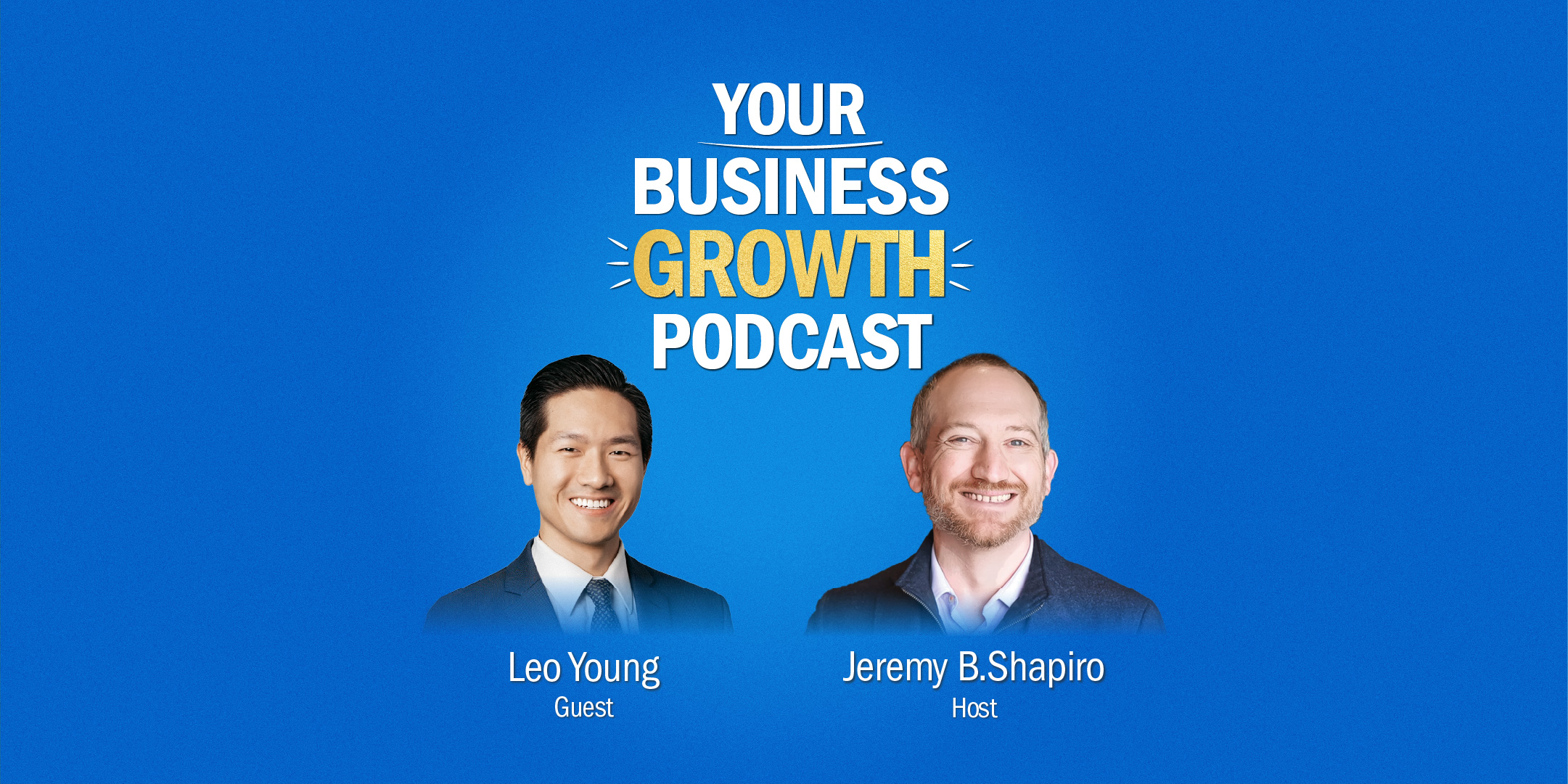
Welcome to today’s episode of Your Business Growth Podcast. I’m your host, Jeremy Shapiro, author of Your Business Growth Playbook, and my guest today is Leo Young.
About Leo Young

Leo Young is the Founder and Managing Partner of Cornell Communities, a national real estate investment firm and operator dedicated to revitalizing manufactured housing communities. With a strong foundation in finance and analytical rigor, he leads the firm’s strategy, acquisitions, and long-term value creation. He currently oversees a portfolio of affordable housing assets consisting of over 500 units across 10 different communities.
Before launching Cornell Communities, Leo built an impressive track record in both institutional finance and high-stakes sales. He previously served as the top regional salesperson for Tesla and worked on the acquisitions team for a $4.5 billion private equity fund. This unique blend of customer-centric execution and professional investment experience allows him to approach property management with a focus on both resident satisfaction and investor returns.
Throughout his career, Leo has led over $75 million in transactions as both a broker and a principal. He is a recognized speaker and thought leader on topics ranging from scaling real estate firms to the immigrant financial mindset. As the host of the podcast The Journey with Leo Young, he provides transparent and practical insights into real estate operations, leadership, and the strategies behind momentum-driven growth.
Leo holds a degree in Finance from The College of New Jersey and earned a Commercial Real Estate certification from Cornell University. He is passionate about helping high-income professionals move beyond stock market volatility to build stable, scalable wealth through cash-flowing real estate. Drawing on his own transition from corporate roles to full-time operator, he remains committed to helping his investors understand exactly how their wealth is being built.
Connect with Leo Young
Speed Round Answers:
- All In Lead Source: Operations
- Books: Steve Jobs by Walter Isaacson
- Unlikeliest Mentor: Mom
Like This Episode? There’s More!
Subscribe!
Your Business Growth Podcast is available on all major podcast platforms. Subscribe today!
Get the Book!
Pickup the #1 Best Seller, Your Business Growth Playbook today online or at your local bookseller!
Meet Jeremy!
Book your Blueprint Discovery Call with Jeremy today and get back to the growth you deserve!
Leo Young Episode Transcript
So if we run it by a third party manager, let’s say they can do three or four units a year and we can do eight. The difference in terms of the, the costs could be anywhere between one 60 to 240 k in terms of like the valuation of the property, property management in-house, we don’t have a minimum for our in-house investments.
Our investors could save 60% or more on their cost. Imagine managing a portfolio of hundreds of housing units only to realize that the third party partners you hired to protect your investment were actually the ones holding you back. You’re personally chasing down rent checks, dealing with neglected maintenance, and watching a revenue stagnate because the people in charge simply don’t care as much as you do.
Our guest today faced that exact crisis in his real estate business. He made a radical operational shift that didn’t just stabilize his communities. It allowed him to cut management costs in half, fill his properties in record time, and even use the resulted savings to acquire his next major investment.
He stopped being a passive observer and became the architect of his own growth. Welcome to today’s episode of Your Business Growth podcast. I’m your host, Jeremy Shapiro, author of Your Business Growth Playbook, and my guest today is Leo Young. Leo, welcome to the show. Thanks for having me here. Very excited.
So Leo, bring us back to the beginning. You made this transition. You were a career sales advisor and you shifted into the world of real estate. Many folks dream about that. Think about that planet, but like you did it. Tell us about that transition from a nine to five to real estate investment. Yeah, so. I, I would say that the dots in life almost never connect when you’re looking forward un, unless you’re, you know, one of those that’s just like strict, you know, like you go into med school, doctor, all that stuff.
But for me, like many others, it did not connect. You know, I, I studied finance in college. I love investments. I love to just figure out the why behind things. Um, I, I’m a philosopher at heart. So after, after graduating, you know, I, I went into sales, um, at Tesla, you know, I, I kind of took the plunge because I knew I needed to work on an important skill that’s like communication.
Um, and, and sales. I hated it. But, um, I got good at it through persistence. But how I, I then transitioned eventually into real estate is I. Got burnt out, you know, ’cause I, I was there during a really tough time in the, in the company’s history. Like, they almost went bankrupt. Everyone was getting, like, worked extra hard.
Um, I liked it. It, it kind of brought out the best in people. It was that, um, that eustress instead of distress. But, um, also, you know, I started thinking about, okay, how do I create more freedom that doesn’t rely on me? Clocking in and out every day. So, you know, naturally, like I, I just knew like, hey, you know, rich people invest in real estate.
So then I started doing research, you know, found it, um, found passive investing, did a bunch of research on that, pulled the trigger, invested in apartment buildings, and then, um, got my license, was helping people learn, uh, what was helping people transact across residential and commercial. So I was learning and earning.
Um, and then worked for a real estate fund for some time on their acquisitions team before starting Cornell Communities now. So we, we are the kind of general partner to the, the limited partners. So I think a lot of folks look at real estate investing as like a passive thing, right? Something where you invest the money you’ve earned and build the wealth with it, right?
But you wouldn’t fall onto create your entire business around this and chose, I think a pretty interesting asset class. Some folks go all single family residential, SFRs, others go multi, so on. You went this direction of like manufactured housing. Talk to me about what got you into that space versus all the other asset classes available.
Yeah, so first off, it, it is a somewhat. Interesting niche because like, no, nobody really thinks about it. And there’s a lot of, uh, pre preconceived notions about, um, you know, mobile home parks, manufactured housing. But how I got into it specifically was, um, so when I was at the fund, you know, I, I had a mutual friend.
He knew I was in real estate, you know, he was in, in private equity at the time and he knew like, oh hey, you know, here’s this real estate guy. Let me sit him down, let me walk him through the investment thesis. ’cause he was working for a real estate fund at the time, um, that specifically targeted mobile home parks.
And he was like, Hey man. This thing is amazing because this, this, and that. Two things that stood out to me. A baseline, you know, economically, it made a lot of sense. You know, like these are really, you know, low cost form of housing. The demand is super durable in both good economies and bad. You know, the business is simple.
It’s not a lot of moving parts. So that made sense. Also there was the social component to it. So impact to me is very important. That’s kind of why I worked at Tesla, is because I wanna help, uh, make the world a better place however I can. So the fact that I’m able to contribute to offering affordable housing, to continuing to offering that and to make it sustainable ’cause.
You know, a lot of these parks, they’re, they’re older and like, you know, getting more dilapidated. So, you know, continuing to put in the maintenance work, the CapEx and stuff to like maintain that was super important. So you. How this impact approach, which like speaks loudly to me, that’s one of my favorite parts of entrepreneurship, right?
Is that we have the opportunity to make a difference in the world. Um, and we get to choose how to do that. Um, I do it in a number of different ways, and you’re doing it in I think, some different and very cool ways, and that has brought you on this journey of growth, right? But that doesn’t always go on forever.
Uh, before we get to the plateau part, you grew the size of the transactions. You’re doing pretty big. You know, folks always wonder about scale. You’re up at the point of $75 million in transactions. Like, talk to us about the journey that got you from getting into it up to that transaction level. Yeah, so, so to, to clarify on that.
So transaction level. So I, I was a broker, so, you know, I, I helped transact a lot in that. I would say right now. Um, a u MRIs were around, uh, 20 something 30 million a UM as far as like our, our portfolio that we’re managing. Um, but yes, I mean, we, we sort of built it up from zero and it was, it’s super tough.
I mean, to, to be completely transparent, it, it’s super tough and like there’s a lot of stuff that happens behind the scenes. That’s why a lot of people like high earners business owners, they choose to be a limited partner into these deals. ’cause like. They value their time. They know what they do best.
They wanna do that, and they wanna find other people that do this part well and just let them handle it. I would say I, I think initially going into it, I, I wasn’t completely aware of it, but now, like being a GP and lp, I’m like, okay, I, I mean, I, I definitely continue to, to invest in other people’s deals and stuff because of that.
But, um, it was a lot of like. You know, twists and turns, like, how do I grow this? How do you like grow through this? Do you stop here? Do you continue? And it, it, it was a ton. So, yeah, I, I have lots to, to share about that. I, I’m sure there’s gonna be some good lessons we get to on that side. Uh, so, you know, as you were growing your business, you did hit a point in scale where you found that properties weren’t being run efficiently by those outside managers.
And there’s a saying, I’ve always heard of the industry, which is like, if your property managers aren’t stealing from you, like you’re just not aware that they’re stealing from you. Right. So, you know, talk to us about like, that stuck phase where you realized like the property management was sort of holding you guys back and that was a, a limiting factor.
What, what was the realization and what was that plateau like? Yeah, so for, for some context, you know, kind of how the, the business model is set up, how we run these properties. So we, we have the, the communities, uh, we have a person on site. They’re usually a community manager. You know, they, they live there.
They’re the eyes and ears. And then a lot of the work happens offsite management wise. So we have a property manager and an asset manager. Property manager does all the day-to-day, you know, like collecting rents, maintenance, all that stuff, you know, coordinating, um, maybe even some repairs and lease ups.
Um, and then, you know, asset manager kind of just makes sure that everything is in line and like big picture planning. So property management, it’s a very like. Churn and burn kind of business. Um, I, I mean, like if you look at property manager, I, I mean, they are, I, I think the thankless people of the, the space, you know, the unsung heroes and like, you’ll, you’ll see a lot of them, they, they just have this certain look to them.
’cause like they’re dealing with stuff all day. They’re talking to tenants, like a lot of bs like, just like non-issues that people are like just, you know, schoolyard, drama, that kind of stuff. Like, you’d be surprised it carries. Throughout your life. Just, just like, oh, you know, he parked there, he wasn’t supposed to park there.
Like, I, I’m gonna do this. So, yeah. I mean, for property managers, like it is a churn and burn job. Like it’s, it’s hard to like run the business efficiently when you’re firefighting the whole day. You know? Like how do you work on the business when you’re in the business, like. Literally like 99% of the time.
So, you know, what we realize is that like, I mean, we, we’ve worked with like several different, like third party property manager, um, companies, and they all have different flavors to them. They do some things well, other things not so well. Some things are included, some things are not. And I, I think the biggest issue is like there’s no.
Comprehensive solution out there that is a comprehensive, and B, like cost effective. Like that’s like, forget about it. So, you know, we, we kind of took the hard look at like. Okay, well if we’re truly in this for the long term and like we wanna build out a good playbook, like we really want to control every step along the process and like, while it really sucks and like if we don’t wanna do it, it’s important to do so it’s important to our investors to do so.
So like we kind of built out the, the property management arm as well. You know, one of the strategies I talk about in your business growth playbook is this idea of like working up your supply chain or looking at your biggest expense areas and how you can bring those in house. And you guys did just that.
Um, I wanna dig into that a little more, but before we do, maybe help our listeners understand like the asset class we’re talking about here, I think single family residentials. Pretty self-explanatory. You own a house, you have a tenant who lives there, you know, multi-family apartments, similar concept, but you have this different class, like where you’re like, you’re leasing out the land but also have units and those also sell, like, tell us a bit more about the mechanics of like the space you’re in.
Yeah. So basically we, we, as the investment group, we buy the entire property, the, and then inside there are these units, you know, mobile homes, manufactured homes. They’re legally called manufactured homes. It, it’s just a, a mouthful to say, and the, the name mobile homes kind of stuck. It’s not really mobile because, you know, they’re, they’re actually like a fix the ground.
There’s skirting kits and all that stuff. Very costly to move. So the business plan is that typically we rent out the land to the residents and, you know, they would make their, their own like repairs and maintenance to their own homes. They would pay us for the, the lot rent. And that, you know, we, we maintain the infrastructure, you know, we make the common areas look nicer, like we maintain the roads, utilities, lighting, et cetera.
And it’s a, it’s a very simple business plan, you know, compared to other asset classes like. Retail, like you need a whole office, you’re like multiple elevators, you know? Same thing with multifamily, like roof fixes. They’re like half a million a pop. Like how do you like budget for that? Your occupancy goes up and down, which is like another point of like churn and burn and like meanwhile, you know, for mobile home parks, it’s, it’s relatively steady because this is the lowest cost form of housing out there that’s not government subsidized.
So. Who doesn’t want cheap rent, you know? So when, when they come here, they stay here and you know, the average occupancy is like 10 plus years as opposed to. 18 months for apartment buildings. So it, it’s a very different business model. It is way tougher to bring in a new unit. It’s like a mini development project.
’cause like you have to get the plans approved and like pour the pads, connect the utilities, and like bring the home in, you know, everything. There’s like. A whole thing, but once you bring it in, it’s like a stable source of income. So you’re making money on the leasing of that land effectively, but don’t have to deal with any of the plumbing, electrical, roofing, any of that.
That’s all the owner of the unit’s responsibility. Exactly, exactly. Are you enjoying this episode? Make sure you hit that subscribe button right now. That’ll help you get more episodes automatically as soon as they come out. So hit that subscribe button right now and if you have a minute, leave a quick rating and review that helps support the show.
You guys are doing the management and you’re starting to deal with some challenges of like having to call residents for late rent. Figure out. The software and all this different stuff, and you’re at a certain level of scale where you need these tools and have to handle it. So like what did that mean for your business when you and your team are now handling the late night calls and you know, the rent collections and all the rest of it?
Yeah, it’s, uh, it’s easier said than done, that’s for sure. I think having hundreds of tenants have your phone number is, is always fun. And also trying to build a system is, uh, another challenge in and of itself. So, you know, I, I think for, for us, like, for, for me, you know, we, we never shy away from challenge.
Uh, we, we know like, even though it’s, it’s hard. It’s important and it has to be done. So we, we just have to figure out a way through it. And you know, in the beginning, like literally it was me, um, like calls were flowing through me. I was renting it, I, I was logging it into our, our, um, property management portal and kind of figuring it out.
’cause I truly think that you have to know the process to be able to build it. And like, if you don’t know, if you just outsource it, then like. You’re, you’re not gonna build a good process and you don’t know what good looks like. So, you know, there was like some period of, of pain, you know, it never goes away, but like, initially like just getting into it, you know, kind of wrestling the beast and, and doing it.
And that was, I mean, looking back like I, I, we never do that again, but it was invaluable to us getting this, you know, off the ground. So you made that shift. You, you got over that hump of hundreds of residents having your number. And got to that point of scale. But you were dealing with cleaning up from like neglect and maintenance, like some poor bookkeeping from, you know, the, the transition and the process and all.
Like, what was the impact of that, or how worried were you about what that would do for your investors? So I think the, the fortunate part is that, you know, we, we really step up wellbeing of the investors. Like, it was never a question, you know, like they, they’re always taken care of. Like, it, it was just more so us working seven days a week over time and stuff like that, like 80 hour weeks or something, just to, to make sure things are done.
But yeah, I mean, as far as the output goes, like we, we still make sure that the, the quality is there. Now, you guys didn’t have to go the route of bringing management in house. You could have found other managers, right. You know, had better contracts, whatever else. Instead focus the time, resources and so on in other aspects, right.
Of getting better returns for your investors. But you chose the strategy of bringing them management in house. Why was that like the, the lowest hanging fruit of the, the choice you guys made? So a big thing is kind of quality control. And you know, when, when it comes to investing in, in real estate, I mean it, this is the, the private equity model.
So, you know, they, they really care about operations. Operations is like the money maker, right? I mean, yes. Like you have to buy, right? But like. You have to have good operations to make the returns that you, you promise, or like, you, you, you’re projecting for your investors. So, you know, for us, like we were seeing like many balls being dropped, it was just like, you know, we’re, we’re asking for things to be done, they’re not done.
Or like, we, we forget to follow up with it because there’s just so much going on that, you know, it, it just made sense to have a, a tighter control around it, you know? Now we have like systems set up where we’re like, okay. We’re tracking like which tasks are overdue. We’re all using the same system. We’re building out kind of property playbooks so that we have like, kind of just a, a single source of truth and, you know, just, just building these out, um, one by one rather than like, right.
I mean, for, for the third party systems, it is like, okay, how do we work with you guys? What system are you using? ’cause they manage other properties. And you, you know, they’re obviously not gonna change themselves for us. So yeah, the, the streamlining piece I think is valuable there, that now you’re not trying to use nine different pieces of software in different portals.
You control all that. That’s, that’s all centralized and that is far more scalable. But it often comes present to like, when you implement this, right? Like that wouldn’t have been the smart move out the gate for your first property. Right. So, all right. In terms of other strategies, I think there’s something else interesting that you, that you’d shared with me and that is this direction you guys went in terms of actually managing like the resale or sale or manuf or, or deployment of new units and all.
So by bringing everything in house. How did that help or hinder your ability to get new revenue online or bring new lots online? Yeah, so that, that’s another one thing that, uh, a lot of the, the third party managers they, they help with, but it is just like not as quick and, and in fact it was significantly slower and like.
Uh, we’re a soft execution than if you just do it yourself. I think the thing with operations is a lot of things, it just requires doing it. But you, you know, with third party managers, like their business model requires them to be profitable managing other people’s businesses. So that means they have to have a high volume of units that they manage.
So as a consequence, like each one person that’s like handling your case probably has like another 19 other properties they’re managing versus like, for you, you’re like, alright. Guys, like we only have these five, seven properties, whatever. Like this is all we do. And like we can run a tight process around that.
So when it comes to bringing in new units, you know, what we call infilling, there’s, there’s many steps and there’s a lot of things that we need to just stay on top of other people on, especially getting like local municipality approvals. You know, sometimes they’re slow as they forget, you know, someone’s out on holiday, they’re not super, you know.
Proactive when it comes to these things. You know, five o’clock hits, like 4 45, they’re out, forget about it. Right? So I think doing that, uh, being able to get a better, uh, quality control over these things and just like be more proactive and seeing on top of that, the process has helped us, like shrink the, the time to bring on units online significantly.
Yeah. So I wanna hear a little bit more about that infilling, right? So if you’re having your property managers take care of that, you’re just one more. Uh, site for them, right? And it might be slower, you guys do it, it can happen faster, higher quantity and so forth. Like, what’s the financial impact of you guys being able to tighten that timeline and handle it infill sooner?
Like what does that look like numbers wise? Yeah. So as, as one example, like you, you know, if we run it by a third party manager, you know, let’s say they can do three or four units a year, um, and, and we can do eight. So you know, the difference in terms of the, the costs on a pure valuation standpoint, it could be.
Anywhere between 1 1 60 to 240 k in terms of like the valuation of the property. And so, you know, if we’re able to just like condense it, do more just, you know, get, get more returns for our investors, get more projects online, then that’s, that’s the way to do it. Yeah. You’re touching on something I think really valuable for our listeners there, and that comes down to this idea of like the business valuation and how that’s done in your industry.
And oftentimes when we talk about like the FA and the Q leverage, you can pull in the business. Adjusting those yes, can help revenue and profitability, but there’s also a longer tail impact on that, which is how it impacts the valuation of the business. And so you guys found by handling some of this opera operationalization and getting this infill done faster, right, that allowed you to increase the value of these properties faster as well, which is a huge upside, more so than just the cash flow.
Right. That’s actual big valuation piece too. Exactly, exactly. Because ’cause like, yeah, I mean our, our, our business model is that like we, we want to return the capital to investors as, as soon as we can, you know, we want to de-risk their investment. So like, when they invest with us, we wanna just like, you know, mad dash to like do the value add.
We do a refinance, return their capital. They’ll keep that snowball rolling with us. So. You know, they, they build that extra stream of cash flow with zero money out of pocket. That’s like the core thesis. Oh, nice. So is that, is that the typical model that you pursue then, that you guys buy with your investors?
You increase the value, then you refi cash out the investors? Uh, yes. So, so we, we return the capital to the investors, but they, they still maintain that ownership. So basically they, they generated a new stream of cashflow and equity ownership with zero out of pocket. That’s really cool. Uh, and I, again, I love how that model differs.
Differs from, I think, more traditional real estate investing. So, all right. Now, it took you guys about two years to get this in-house property management running smoothly. Like what were some of the biggest hurdles and obstacles you faced in bringing in this previously outsourced, uh, service? In-house?
Yeah. I, I think a lot of it is that we, we didn’t have a playbook, um, there, there was no, like property management 1 0 1, like, it, it’s not like we went into a course, so a lot of it was indeed like figuring things out. I, I mean, yes, there were some like courses that, that teach you, but it’s not like.
Starting and getting up and running a business is not easy. Right. It it, there there is no like true A to Z. So us actually doing that, yes, we didn’t start from zero. It was helpful for us to know, but actually doing it, I think it, it was two challenges at the same time. It was like, okay, doing the actual property management work and then actually building out the systems.
So tho those two, you know, you, you, you have to like. Maintain your capacity, which is always like the difficult part. So like how do you, how do you wrestle those two at the same time? So I think through that lesson, I will say I’ve gotten a lot better at prioritizing, at figuring out like, okay, what is the bottleneck at this point?
How do we solve it? How do we get past it? And, uh, you know, that, that’s been super helpful. Nice. And I think that’s one of those things where it’s like you, you put in the reps, you do something enough times, oftentimes finding our own way, and you suddenly discover expertise and mastery in places you never thought you’d find that.
Exactly. And, and that, that’s one of the beautiful, uh, parts about entrepreneurship. Is that like, like who you become along the process is like far more important than like what you get. That’s really well said. Um, from the outside, you have friends working nine to fives, they see you running your own business, and they just see that duck floating across the water.
But no one has any idea, like the craziest swirl of water, of the paddling of the feet underneath and all the trials and tribulations and stumbling blocks and things you hit along the way that get it going smoothly, right? But that part of entrepreneurship is you get out there and you do it, and you fail, and you fail fast, and you learn, you recover, and you keep going.
And. You ask any entrepreneur as I love to do, um, about that journey and it is full of quote failures and major lessons learned and stumbling blocks and all. Like no one just has that hockey stick rocketship growth out the gate with no lessons learned. Yeah. Yeah. And, and look, I mean, entrepreneurship is not for everyone.
I, I, I think it takes a certain level of like pain tolerance of like just stubbornness as well. But I mean, look, if you have that, it’s absolutely like more fulfilling to a lot of people. Entrepreneurship is fulfilling to a lot of people, but is not for everyone. You’re in the marketplace of value, right?
Like the ba basically the, the marketplace will give you a dollar if you can give them at least a dollar and 10 cents of value back. Otherwise, like they keep that money in their bank. So, you know, you have to figure out like, how do you become valuable and like that. That’s way easier said than done. Like, you know, property management, like, okay, fine.
Like can you do it well enough to actually. Check the box, then, okay, that’s starting point. But like, can you crush it? If you crush it, then people wanna work with you. Fine. That, that’s great. That’s kind of what we work towards. So let’s talk about, um, the numbers on that, right? So when you outsource property management, there’s usually pretty set fee structure, kind of industry standard breakdown.
What does that look like when you guys are paying for property management and it’s someone else’s problem versus when you insource that? Like, are you able to give us a little before, after, number wise on that? Yeah, so I mean, it, it really depends on like the, the company and so, so there is some like adjustability in, in the figures, but you know, rough ballpark, anywhere between like five and and 10% for a property management fee is what we, what we see out there, you know, people on the lower end, like the, the 5%, those might be like more institutional guys.
They, they might have like. You know, $3,500 minimum. Meanwhile, like, okay, to support a $3,500 like management fee on your property, that’s not grossing that much. You know, like what’s the break even point for that? Right. So that’s like a calculation that you have to run, you know? ’cause if your property is like, 30% of your actual property is gross, if, if you’re not careful with it.
So I think that is something important that people miss out on. People just, they listen for the, the actual percentage and they’re like, oh yeah, you know, it’s 5%, right? Like, it’s not too much when you bring it in house. Like you have ultimate cost control. I mean, I, I was like very lucky to, you know, connect with good people I think.
People are what make the business work. Um, nothing substitutes people in this space. Like, I mean, AI like can help, but you need people to use AI for it to work. So I think being lucky enough to, to find someone that aligns with your vision, long-term vision, what you’re building out here, the impact that you’re doing.
Impact is super important. ’cause like, I mean, you can make a dollar anywhere, but like, why, why do you wanna make a dollar here is because you think it matters here. So property management in-house, like Yeah. I mean, we, we don’t have a minimum for our, uh, in-house investments. So then like our investors could save like.
60% or more on their costs. And like if you, if you just understand like commercial real estate is, is valued on a cap rate. So you know 60%, like if you’re saving like 2000, 2000 a month, that’s like 24, 20 4,000 a year, then like 24,000 at a 10 cap. 10 cap is super conservative. Right. That that’s like $240,000 valuation compared to like, if it’s a five cap, then that’s like 480,000.
Yeah. And that again goes back to that. You making a change in cashflow today has a much bigger impact on that valuation side. So let’s talk about that a little bit more. Right? Your quote, competition out there that you’re competing with to sell these manufactured homes, or, you know, the lots underneath and all.
When you’re able to control your costs, what does that mean in terms of what you can do with the competition? You know, I, I think for the, the sale of the manufactured homes, it’s, it’s another model. It’s, it’s one that for us as a. You know, community owner and operator, like, we don’t really try to profit from it, you know, we just want to increase the, the amount of occupancy so you know, it, it was never seen as a profit center for us.
Um, so I, I think as such, the, the problem that we’re solving for by bringing that in-house is the speed and certainty of execution. So, you know, making sure that like the, the docs are signed off on, you know, the right thing is done, we’re getting photos, we’re getting it placed, right. And, you know, we’re passing inspection and like getting the units, um, online.
Yeah, oftentimes like when you’re able to control costs. Or you at least better understand your numbers. You can start to undercut the competition, right? You can attract prospects better. You know how much you can pay to get a prospective customer, uh, and so forth. Um, and so that’s one of the beautiful things I think you guys did is you, you got that cost control in place, which gave you more of that flexibility.
So. If you were talking to another business owner or real estate owner that’s currently feeling like stuck with poor property management, like what advice would you have for, you know, someone dealing with some of the challenges that you face on the management side? Yeah, I, I think definitely like when, when you are the operator slash entrepreneur, it’s very important to figure out like what your bottlenecks are.
Like what is causing you. Stress, what is causing your issues to not be done like the way that you like it to be? So to attack it from like, kind of what matters most from that perspective, try to figure out, okay, like for example, for the, the property management, like, are they missing, are they not good at collecting rents or are they not good at making, uh, maintenance repairs?
Maybe you can start by supplementing what they have. So, you know, I, I, I think. As a business owner like you, you never want to do drastic things like I, I mean, look, I’m no Elon Musk, like doing drastic things requires a lot of effort, a lot of resources, and like a class people to be able to execute it well.
So for, for the most part, you want to just make slow changes to your course as you sail along. So, okay, you wanna supplement, maybe you hire a maintenance worker that, that’s like helping you. To supplement, to work with that property manager. Yes, it’s gonna increase your costs, but you’re gonna have better execution because ultimately you as the operator, like you get paid on the property valuation, not, not like the day-to-day like fee stuff.
So getting the, the better control there. And also stress. Stress. I, I mean, like, I, I can’t say it enough, but just like managing your yourself, your, your mindset, how you show up as a person, as a leader, that’s. Super important because like everything else cascades from that. Yeah, that’s well said. So implementation is not without its challenges, right?
So for business owners looking to bring in, you know, one of the top line expenses, one of the biggest cost categories, right? That’s gonna have some bumps, much like you encountered, like knowing what you know now, what would you have done differently? Implementing this vertical integration, I would bring in more help.
So I, I would, I would budget for this ahead. I would kind of mentally prepare, like, okay, like these next six months will be super tough. It’ll be a transition period. And like, give yourself longer transition periods than, than you think. I think, um, a lot of like entrepreneurs, I’ll speak for myself. Like I, I tend to be optimistic when it comes to these things.
I tend to think that things are quicker and because I measure from my speed, I’m just like. Just, just do it. Just make that call, right? What, what’s wrong? So, um, when it comes to other people, you have to follow off. You have to see what’s going on. Are they making sense? Do they know what to do? Do they know how to do it?
Do they like it? So, giving yourself more buffer room for that transition, budgeting for it, bringing in people that actually can help you. So like, you know, a fractional, you know, COO for example. They would give you helpful perspective. They would point blind spots out for you. I think that’s super helpful.
Um, and, and just ask for help, you know? Yeah. I, I think be well networked in your space so that you can reach out to folks for help, obviously, like return the, the, the favor, pay it forward. Um, but I mean, reaching out to, to other operators for help has been invaluable for me. I often say as an entrepreneur, it can be lonely at the top.
Right. But if you surround yourself by folks who are doing this stuff, like there’s so much value in that as people to celebrate your successes and your wins help you out when you’re challenged and you’re stuck. Um, so that, that’s, that’s wise advice. So we’re numbers guys, right? And you look at numbers in a few different ways for investors, for the properties, for and, and all the rest of it.
Like, when you and your team circle up and look at the, the whiteboard, the digital dashboard and so on, like what are some of those core KPIs or numbers that you track? Today to know how well you’re doing and if you’re heading in the right direction. Yeah. There, there’s, there’s a ton of numbers, but I, I think the, the numbers all, all sort of flow up to how on track are we to the business plan, so that, that’s like the core question.
Everything kind of trickles down. So, you know, it, it could be like the percentage of delinquencies, you know, who’s late on their rent, you know, the, the number of open maintenance tickets, how long they’re open for, um, budget versus actual. It’s like, okay, well, did we, did we, uh. Exceed our landscaping budget this year.
Did we not? You know, and, and why? If there’s a variance, um, you know, units brought in that’s like more macro. ’cause like, when, when you’re getting into like CapEx work, bigger stuff, it’s like harder. You, you, you need more like fudge factor a little bit. But yeah, I mean, I, I think maintaining the, the day-to-day focus on the little numbers, that’s super important.
Um, and, and we, we use something, uh, called the EOS system. I’m sure you’re familiar with it. Um, just, just like everyone has one number. Just, you know, if you wanna know how well you’re doing, like how is your number right? And, and uh, that’s really helpful. Nice. Alright, so before we wrap a few quick rapid fire questions for you.
If you had to start all over again from scratch, what one lead source would you go all in on this? Maybe for you, this is investors or, or tenants, you know, answer that how you like, but what would you, where would you go? All in lead wise? Hmm. I would go all in on operations. I, because I, I mean, yes, I, I kind of did, but if I go all in on operations, I can get certainty of execution.
I could shorten that, that time span, and I can basically compound my investors’ money quicker. So we can get more projects in because like, look, if I crush it for them and, and like they would want to keep rolling that snowball with us. So, you know, we just do that and we, we grow that way. Nice. Aside from obviously my book, your Business Growth Playbook and it sounds like traction as well, what are some of your top favorite business books?
So one, one book I I read recently that was really good. Uh, it was the Steve Jobs biography. I, I read it, you know, like 15 years after it came out. But just to understand, you know, his mind, Steve, Steve is like a phenomenal visionary and like absolutely. He, he willed a lot of things into existence. And I think like as entrepreneurs, like sometimes, you know, we, we get caught in the minutia of like the KPIs and stuff.
You have to drive the boat for your team, nobody else is gonna do it. And like a strong visionary like Elon, like, he’s able to like, just will a lot of things into existence and I, I think we, we forget that we have that power. Nice. Who would you say is one of your un unlikeliest mentors? It’s my mother. So, you know, I I, I think growing up I, I wasn’t really brought with, uh, a lot of financial literacy.
I had to learn a lot of this myself. Uh, my, my parents kind of just like didn’t tell me much of what’s going on financially wise. So like, I, I always thought we were poor, but turns out we were house poor, like they were just investing. Um, but, you know, I, I think learning about her story modeling after it, ’cause like.
You know, she, she had a career that was like, basically made, uh, obsolete by Google Translate. She, she was a career translator, but like, she had the foresight of like, all right, I, I think Google Translate is coming. Like, I, I can’t rely on this. Like, I gotta make some investments. So like, she was investing in real estate.
And like fortunately, she was fine and, and like I think having that foresight of like, okay, fundamentally how should you be thinking as a, an investor, that was super important. She never taught it to me, but I just learned it. That’s really powerful. You know, we made a decision a number of years back that, you know, previously mom and dad go out and talk about stuff and do things.
And as far as the kids know, like, you know, uh, mom and dad are just out for the evening, not realizing the events we’re at. Like, you know, these are usually like if we’re going out to a gala or some, you know, nonprofit event, they would just know we’re gone. And so we made the choice, like maybe we should include them in that and tell them where we’re going and what we’re doing and what the organization does and do you want to come with us?
And we started doing that. And same thing, like on the investment side. Instead of just being like, oh yeah, while they’re at school, a notary came by and we closed on a property. We started talking to ’em about like the financials of the property. We looked through them, we’d talk about the numbers. We bring ’em up to speed, we show them the inspection reports, like we started involving them more in that stuff.
So it wasn’t just a background thing that happened in their youth that they never knew about. Right. But it was something that they have eyes on that they have, you know, financial literacy around. Um, and I love that, um, you realized. You know, at some point later on, your mom is doing a lot of these things and now you know, you, you see that and, uh, she made a lot of the great moves that you’re doing now as well.
So I love it. And I, I, I will add this. So like 1, 1, 1 of the most like genius things and kind of funny to think about that I, I had, uh, a buddy tell me. So he, he does, uh, quarterly reports with his kids and he, he writes a quarterly report to his kids, rating his kids and how they did. And also telling his kid what he’s doing in his career and why it’s important, how it helps a family.
So I was like, wow. Like you’re, you’re teaching a 7-year-old dad. Like, I gotta do that too. Right. Wow. That’s great. Uh, I I, I was surprised when you said he was reviewing them. I thought he was doing the self review for them of what’s going on, but, wow. Alright. So Leo, to recap for our listeners, you move from a frustrating plateau with poorly managed properties.
To a bold strategy over the vertical integration which allowed you to cut costs in half, fill your units faster and significantly lift your property valuations to fuel your next wave of acquisitions. Definitely. Nice. And so for our listeners who wanna learn more about you, where should they go right now?
Yeah, so two ways to, to reach out. One, you know, if you wanna learn about our platform, mobile home parks, if investing with us, potentially you can go to cornell communities.com. That’s C-O-R-N-E-L-L-C-O-M-M-U-N-I-T-I-E s.com. Or if I could be a resource in any way, I’ll try to respond as best as I can on LinkedIn or on Instagram.
LinkedIn is Leo Young, L-E-O-Y-O-U-N-G, Instagram. It’s Leo Young Real Estate. Nice. Um, so thank you again folks that was, uh, Cornell Communities, or you can find Leo Young, where you’ll find me on LinkedIn. And, uh, Leo, thank you so much for sharing with us today. You’ve had quite a journey and you’ve done a great job with that vertically integration.
And, uh, your company, your team, your investors, you know, everyone is all the better for it. So thank you for sharing, uh, so many of your lessons learned with us. Thanks for having me, Jeremy, and, and, uh, to the listener. I hope you got something helpful from it. Um, the one thing I would encourage you to do is take action, just like one step.
I think it’s so easy to listen, just be a passive listener, but just like, make yourself 1% better because of this action is always greater than inspiration. Absolutely. Thanks so much for listening. Quick reminder, hit that subscribe button right now so you can get more episodes when they come out automatically.
And remember to leave that rating and review right now.
Like This Episode? There’s More!
Subscribe!
Your Business Growth Podcast is available on all major podcast platforms. Subscribe today!
Get the Book!
Pickup the #1 Best Seller, Your Business Growth Playbook today online or at your local bookseller!
Meet Jeremy!
Book your Blueprint Discovery Call with Jeremy today and get back to the growth you deserve!